Translating Opportunity Texas

Translating Opportunity Texas is a coalition of partners working with Texas colleges to establish effective English as a Second Language practices within the Talent Strong Texas Pathways framework for institutional reform. This work spans adult education through credentials of value, including industry-based certifications, certificates, and degrees that lead to careers with living wages.


​​Current Landscape

In 2023, WestEd and Student-Ready Strategies published a report, Translating Opportunity: Improving Postsecondary Pathways for Multilingual Learners of English, which 1) examines the characteristics of the MLE students, who play an important role in U.S. society but are often marginalized and underserved in the postsecondary system; 2) explains how postsecondary education policies, structures, and practices impact this population; 3) identifies the supports that MLE students, faculty, and staff need to increase student success in the postsecondary space. Using a multi-strand approach (outlined below), insights were made that Translating Opportunity is now putting into action in collaboration with Texas colleges.


TOT Resource Hub

Welcome to the TOT Resource Hub—your one-stop collection of tools, learning opportunities, and evidence-based insights to strengthen ESL pathways and better support Multilingual Learners of English (MLE) across Texas community colleges (and beyond). Use the navigation or category tiles to explore resources by format (modules, videos/webinars, reports, and tools), or start with what best fits your role and immediate needs.


What you’ll find here:

Professional Learning Modules: Research-informed, practice-centered modules for ESL/ESOL faculty and staff on integrating campus resources into INRW coursework, supporting multilingual readers, and using generative AI in language instruction. Modules can be completed independently or with a PLC, and include facilitation guides and embedded resources.


Campfire Chats: Short, conversational webinar recordings featuring ESOL innovators across Texas community colleges—spotlighting programs like the Bridge Program (El Paso Community College), the Intensive English Program (Houston Community College), and student perspectives on effective website design and communication.


Technical Assistance Reports: Clear summaries from curricular mapping, student-facing communication reviews, and support-service analyses—highlighting barriers, opportunities, and actionable strategies to streamline ESL pathways and accelerate progress toward college-level coursework and credentials of value.



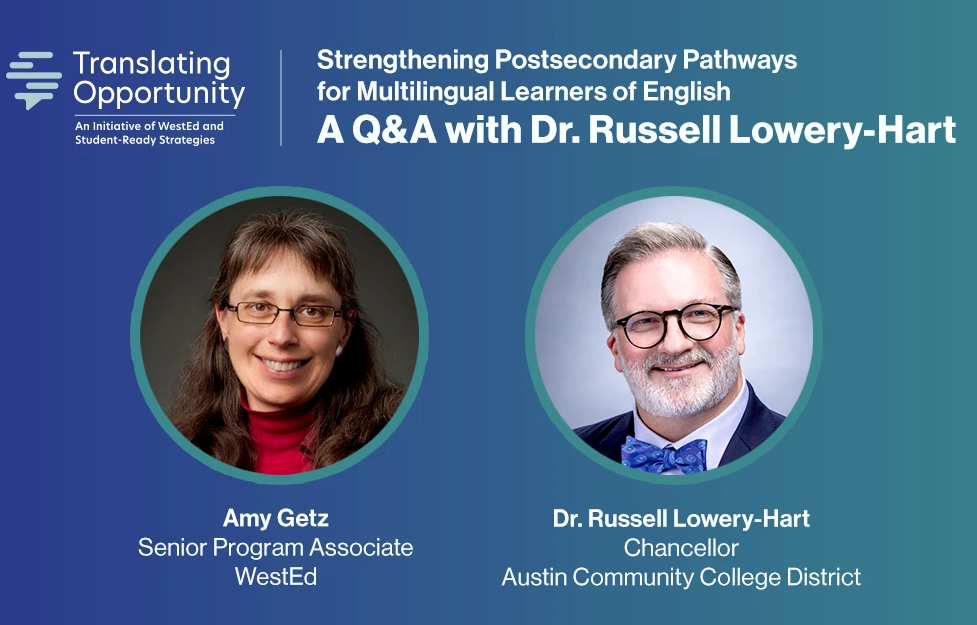
Amy & RLH
Multilingual Learners of English Discuss the Importance of a Culture of Care in Higher Ed
Multilingual Learners of English Discuss Pursuing their Postsecondary Goals
Multilingual Learners of English Discuss Balancing Life + Higher Education

Key Insights

  • The MLE population is complex and diverse, and it is critical to understand the population and context within a particular institution.
  • MLE students are more successful when English as a Second Language (ESL) programs are aligned across Adult Education and college programs and create clear pathways into certificate or degree programs.
  • Colleges can undertake a number of evidence-based practices to improve pathways for MLE students including: gathering data and evidence to identify and address barriers to student success, shortening and simplifying ESL course sequences, improving placement practices, and providing holistic supports.

Slide Deck & Webinar Recording:


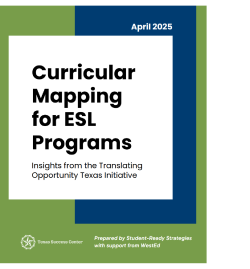
Curricular Mapping for ESL Programs

Curricular Mapping for ESL Programs

This report summarizes insights from a curricular mapping initiative conducted with four Texas community colleges as part of the Translating Opportunity Texas effort. The project focused on examining English as a Second Language (ESL) pathways to better support Multilingual Learners of English in progressing toward credentials of value.

Through a structured curricular mapping process, participating colleges visualized their ESL course sequences, placement practices, and transition points to identify strengths, complexity, and opportunities for improvement. The report highlights key patterns and takeaways across institutions. It also offers research-informed considerations and recommendations for streamlining ESL pathways and strengthening on-ramps to academic and career programs.

These findings provide practical guidance for institutions seeking to redesign ESL pathways that accelerate student progress, reduce unnecessary barriers, and support equitable postsecondary and workforce outcomes for multilingual learners.

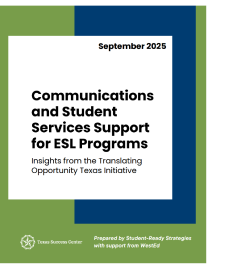
Communications and Student Services Support for ESL Programs
This report presents findings from a review of student-facing communications and student support services for students in English as a Second Language (ESL) programs. Specifically, the review examined how colleges participating in the Translating Opportunity Texas initiative communicate with and support Multilingual Learners of English (MLEs) as they navigate ESL programs and transition toward college-level coursework and credentials of value.

Through an analysis of ESL-related website content and structured conversations with faculty, staff, and administrators, the report highlights strengths and opportunities across institutions. Drawing on these findings, the report offers practical recommendations to help institutions strengthen communication practices, improve access to information, and enhance coordinated student support for ESL learners. Together, these insights provide guidance for colleges seeking to create more navigable, inclusive, and supportive environments for multilingual students.


Multilingual Learners of English Focus Group Findings – Cohort One Colleges


Multilingual Learners Focus Group – Student Video 1
Multilingual Learners Focus Group – Student Video 2
Multilingual Learners Focus Group – Student Video 3
FacebookTwitterLinkedInEmail